
Why MSMEs Without Real-Time Visibility Are Quietly Falling Behind
Many Micro, Small, and Medium Enterprises (MSMEs) in 2026 are still operating with manual systems that were designed for a much slower business environment.
Walk into many small businesses today and you will still see:
- Receipts stacked beside the cashier from multiple days of sales
- Inventory tracked in notebooks or spreadsheets updated manually
- Sales calculated using calculators after closing time
- Reports prepared late at night when errors are harder to verify
- Owners constantly rechecking numbers due to lack of trust in records
This is not just an operational habit, it is a visibility problem.
Because when a business cannot see what is happening in real time, it is always reacting after problems have already affected sales, inventory, or cash flow.
Most MSMEs do not struggle because they lack customers.
They struggle because they make decisions using delayed or incomplete data.
And over time, small delays in information lead to repeated losses that only become visible during end-of-day reconciliation or monthly review.
The Real Cost of Running a Business Without Visibility
Manual systems often feel manageable in the beginning.
Many MSMEs start with:
- Notebook-based inventory tracking
- Calculator-based sales computation
- Spreadsheet updates after business hours
At a small scale, this works.
But as transactions increase, the system begins to break in small but constant ways:
- Entries missed during peak hours
- Stock updates not recorded after sales
- Pricing errors not reflected across records
- Manual corrections that are never fully reconciled
Individually, these issues seem minor.
But in real business environments, they accumulate daily.
Manual systems do not fail suddenly, they fail through repetition.
Why Delayed Reporting Leads to Financial Loss
Many MSMEs only review performance at the end of the day or end of the month.
By then, the business has already operated for hours or days without correction.
This leads to real operational consequences such as:
- Fast-moving products going out of stock during peak hours before restocking decisions are made
- Cash differences only discovered during end-of-day counting when tracing becomes difficult
- Slow-moving inventory sitting in storage for weeks, tying up working capital
- Repeated pricing or input errors affecting multiple transactions before detection
Even small inconsistencies, if left unchecked for days, can affect dozens of transactions.
The core issue is not reporting itself.
It is that decisions are always based on past activity instead of current business conditions.
Inventory Management Problems That Quietly Reduce Profitability
Inventory issues rarely appear as large visible losses.
Instead, they appear as small daily inconsistencies:
- A few missing items
- A few unrecorded adjustments
- A product not updated after a sale
Individually, they feel harmless.
But in retail and F&B operations, even small variances compound quickly.
For example:
- 2–3 missing or incorrect items per day can create noticeable stock gaps within weeks
- Repeated overstocking ties up cash in slow-moving inventory
- Shrinkage is often only discovered during physical inventory counts
By the time it is visible, the losses have already accumulated.
This is why inventory management remains one of the most critical yet underestimated MSME challenges.
Why MSMEs Miss Opportunities Without Real-Time Data
Business conditions change faster than most manual systems can track.
A product that sells well on Monday may slow down by Friday.
A branch performing well one week may decline the next due to demand or staffing changes.
But without real-time data, these shifts are only noticed after they have already affected revenue.
For example:
- A best-selling item may already be out of stock during peak hours before anyone notices
- A declining branch may only be identified during weekly reporting, when recovery options are limited
- Sales trends are analyzed days later instead of during active business hours
This creates a constant cycle of reacting too late instead of adjusting early.
Why MSMEs Still Rely on Manual Systems
If digital systems improve accuracy and speed, why do many MSMEs still hesitate?
In most cases, the reason is not resistance, but uncertainty.
Technology Feels Disruptive
Many business owners assume digital systems will:
- Disrupt daily operations
- Require extensive staff training
- Add complexity to simple workflows
But what is often overlooked is the hidden cost of staying manual:
- Constant error correction
- Repeated reconciliation work
- Delayed decisions due to missing information
The complexity does not disappear, it simply shifts into daily effort.
“We’re Too Small for That”
Many MSMEs believe systems are only for large enterprises.
But in reality, smaller businesses are more sensitive to inefficiencies.
A small tracking error in a large company may go unnoticed.
In a small MSME, the same error can immediately affect cash flow or stock availability.
This makes operational visibility even more important at a smaller scale.
Manual Tracking Feels More Controllable
Manual systems feel “controlled” because everything is written directly by the business.
But in practice, they create:
- Multiple versions of truth (notebook, spreadsheet, memory)
- Frequent double-checking
- Time spent verifying instead of acting
Over time, control shifts away from decision-making toward record management.
What Modern MSMEs Look Like in 2026
Successful MSMEs today are not defined by size, they are defined by clarity of operations.
They are able to:
- Track sales as transactions happen
- Monitor inventory automatically
- Adjust operations during the same business day
- Reduce manual reconciliation work
Real-Time Sales Tracking for MSMEs
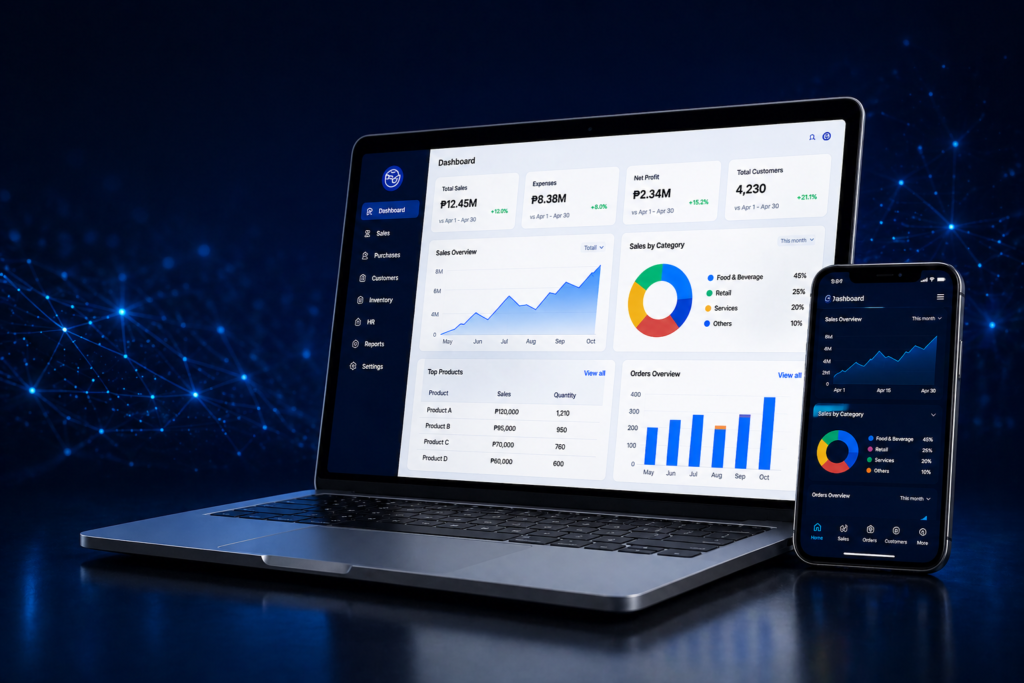
Instead of waiting for end-of-day reports, businesses can now see every transaction as it happens.
This enables:
- Identification of peak sales hours during the day
- Real-time product performance tracking
- Branch-level comparison during operations
This allows decisions to be made while opportunities are still active.
Automated Inventory Management Systems
Inventory updates immediately after each sale.
This helps businesses:
- Prevent stockouts
- Avoid overordering based on outdated data
- Reduce discrepancies that only appear during audits
Even small improvements in inventory accuracy directly improve cash flow stability.
Centralized Business Data Systems
Instead of scattered records across notebooks and spreadsheets, modern systems centralize business information.
This includes:
- Sales performance
- Inventory movement
- Product performance
- Operational summaries
This reduces time spent reconciling data and increases time spent making decisions.
Data-Driven Decision Making in MSMEs
Experience remains important, but data improves accuracy.
With real-time insights, MSMEs can:
- Adjust stock levels before shortages occur
- Optimize staffing based on traffic patterns
- Identify declining products earlier
- Reduce waste and inefficiency
The Emotional Cost of Poor Business Visibility
Beyond financial impact, lack of visibility creates constant operational stress.
Many MSME owners experience:
- Repeated late-night checking of reports
- Manual verification of sales and inventory
- Anxiety about missing cash or errors
- Difficulty stepping away from daily operations
This is not just workload, it is uncertainty.
And uncertainty reduces decision-making clarity over time.
Why Digital Systems Are Now a Business Requirement
Digital systems are no longer optional improvements.
They are becoming essential because:
- Business activity moves faster than manual tracking
- Errors persist longer without automation
- Opportunities are lost due to delayed information
Over time, these inefficiencies compound into measurable losses.
Even small improvements in speed and accuracy lead to:
- Fewer daily errors
- More stable revenue patterns
- Better cash flow control
- Reduced operational stress
Most MSMEs begin their transition gradually starting with sales tracking, then inventory, then full system integration.
The Future of MSMEs Depends on Operational Visibility
In 2026 and beyond, business success will not only depend on sales volume, but on how clearly a business can see its own operations.
Because unclear systems do not fail instantly.
They fail gradually through repeated missed signals:
- Not knowing stock is already depleted
- Not noticing declining sales trends early
- Not seeing errors until after they spread
The businesses that will thrive are not those that sell the most, but those that can see the most clearly.
The future of MSMEs is not only about selling more.
It is about seeing clearly enough to protect what you already earn, and growing it with confidence and control.
At Nego Tech, we help businesses automate operations so owners can make faster and smarter decisions.
The goal is not to replace how your business currently works overnight…
It is to start removing the small gaps that create daily inefficiencies.
Even starting with visibility in one area like sales or inventory, can already reduce guesswork and improve decision-making.
From there, the system can grow with your business, at a pace that fits your operations.
If you want to learn more, message us for a free business assessment.